Best Microscopes
Find the best microscopes for science and education.
Updated April 202610 picks1 min read
iAdvertising Disclosure▾
1
Best Overall
9.0
1,761 reviews
BEBANG 1000X Handheld Microscope 4K

- ✓1000X magnification with 5-level zoom range
- ✓2.0" 4K screen displays fine details clearly
- ✓Rechargeable battery for portable field use
Check Price
available at
1Best Overall

1,761reviews
BEBANG 1000X Handheld Microscope 4K
- ✓1000X magnification with 5-level zoom range
- ✓2.0" 4K screen displays fine details clearly
- ✓Rechargeable battery for portable field use
9.0
Check Price
available at
2
9.4
857 reviews
Acoath 1000X Handheld Microscope

- ✓1000X magnification on 2-inch HD IPS screen
- ✓8 adjustable magnification levels for detailed viewing
- ✓Three light modes for optimal specimen illumination
Check Price
available at
2

857reviews
Acoath 1000X Handheld Microscope
- ✓1000X magnification on 2-inch HD IPS screen
- ✓8 adjustable magnification levels for detailed viewing
- ✓Three light modes for optimal specimen illumination
9.4
Check Price
available at
3
9.4
365 reviews
1000X Handheld Microscope 4K 2.4in

- ✓200-1000X magnification with 4-level zoom
- ✓2.4in LCD screen displays 4K images
- ✓Includes neck strap for hands-free use
Check Price
available at
3

365reviews
1000X Handheld Microscope 4K 2.4in
- ✓200-1000X magnification with 4-level zoom
- ✓2.4in LCD screen displays 4K images
- ✓Includes neck strap for hands-free use
9.4
Check Price
available at
4
Best Value
9.2
551 reviews
1000X Digital Microscope with 2MP Camera

- ✓【1000X Magnification & 2MP Camera】Real 1000X
- ✓Unlike toy microscopes, our
- ✓Tests proved 92% of kids could operate
Check Price
available at
4Best Value

551reviews
1000X Digital Microscope with 2MP Camera
- ✓【1000X Magnification & 2MP Camera】Real 1000X
- ✓Unlike toy microscopes, our
- ✓Tests proved 92% of kids could operate
9.2
Check Price
available at
5
9.0
1,197 reviews
BEBANG 1000X Handheld Microscope 4K

- ✓1000X magnification with 5-level zoom range
- ✓4K 2.0" screen displays detailed specimens
- ✓Rechargeable battery for portable use
Check Price
available at
5

1,197reviews
BEBANG 1000X Handheld Microscope 4K
- ✓1000X magnification with 5-level zoom range
- ✓4K 2.0" screen displays detailed specimens
- ✓Rechargeable battery for portable use
9.0
Check Price
available at
6
9.0
387 reviews
Vorth Kids Digital Microscope 2.4in
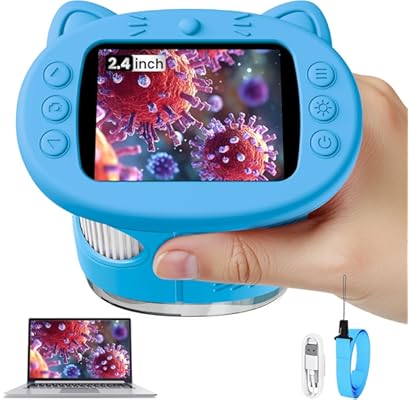
- ✓2.4in HD screen for clear specimen viewing
- ✓Dual optical and electronic imaging modes
- ✓Food-grade silicone construction for safe child use
Check Price
available at
6
387reviews
Vorth Kids Digital Microscope 2.4in
- ✓2.4in HD screen for clear specimen viewing
- ✓Dual optical and electronic imaging modes
- ✓Food-grade silicone construction for safe child use
9.0
Check Price
available at
7
8.6
2,194 reviews
Ashfly Mini Handheld Microscope

- ✓Takes photos and videos with 200 photo storage
- ✓Supports up to 64GB memory card expansion
- ✓Illuminated lens for detailed specimen viewing
Check Price
available at
7

2,194reviews
Ashfly Mini Handheld Microscope
- ✓Takes photos and videos with 200 photo storage
- ✓Supports up to 64GB memory card expansion
- ✓Illuminated lens for detailed specimen viewing
8.6
Check Price
available at
8
8.6
1,040 reviews
TOMLOV P10 Handheld Microscope
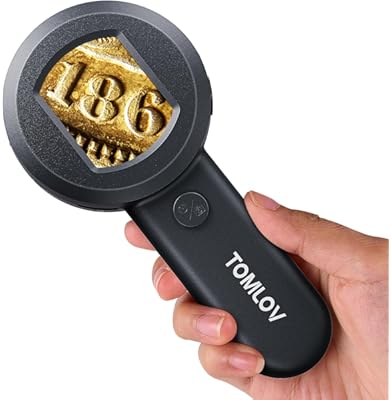
- ✓2-inch LCD screen for live viewing
- ✓Easy image sharing for group exploration
- ✓Ideal for jewelers, hobbyists, nature study
Check Price
available at
8
1,040reviews
TOMLOV P10 Handheld Microscope
- ✓2-inch LCD screen for live viewing
- ✓Easy image sharing for group exploration
- ✓Ideal for jewelers, hobbyists, nature study
8.6
Check Price
available at
9
8.0
9 reviews
Elikliv LCD Digital Coin Microscope
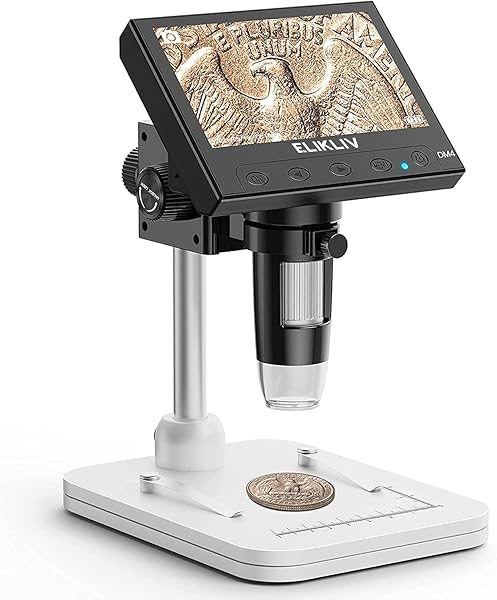
- ✓4.3" 720P HD display with real-time imaging
- ✓8 LED fill lights for full illumination
- ✓Ergonomic large screen design
Check Price
available at
9
9reviews
Elikliv LCD Digital Coin Microscope
- ✓4.3" 720P HD display with real-time imaging
- ✓8 LED fill lights for full illumination
- ✓Ergonomic large screen design
8.0
Check Price
available at
10
-100%
8.0
1000X Digital Handheld Microscope

- ✓1000X magnification reveals tiny details clearly
- ✓Portable design perfect for outdoor exploration
- ✓Digital display shows live magnified images
Check Price
available at
100% off
10

1000X Digital Handheld Microscope
- ✓1000X magnification reveals tiny details clearly
- ✓Portable design perfect for outdoor exploration
- ✓Digital display shows live magnified images
8.0
Check Price
available at
Buyer's Guide
Magnification Range and Optical Quality
Most consumer microscopes claim 1000X magnification, but optical quality matters more than raw numbers. Compound microscopes with glass lenses deliver sharper images at 400-1000X for biology specimens, while digital handheld models typically excel at 20-200X for electronics, coins, and surfaces. True 1000X requires oil immersion and stable mounting—handheld units rarely achieve usable detail above 400X despite marketing claims. Look for models with at least 2MP sensors for digital capture and adjustable LED lighting to reduce glare.
Intended Use and Specimen Compatibility
Compound microscopes with slide stages suit prepared specimens (cells, bacteria) but can't examine 3D objects. Handheld digital microscopes handle coins, circuit boards, skin, and plants but lack the resolution for cellular biology. Stereo microscopes offer 20-80X magnification for dissection and inspection of larger specimens. Match the microscope type to your primary use—a $60 handheld unit won't replace a $200 compound scope for student biology labs.
Digital Features and Connectivity
Digital microscopes with screens (2-5 inches) let multiple people view simultaneously without eyepiece sharing. Models with WiFi or USB connectivity enable computer display and image capture for documentation. Resolution matters: 720p suffices for casual use, but 1080p or 4K sensors ($80-150) capture publishable detail. Built-in batteries add portability for field work, while AC-powered units provide consistent lighting for lab environments.
Build Quality and Stability
Handheld microscopes under $50 often have loose focus wheels and flimsy stands that cause image shake above 200X. Metal frames and weighted bases maintain stability during high-magnification work. Adjustable focus ranges (typically 10-50mm working distance) accommodate various specimen thicknesses. For educational settings, prioritize models with durable construction and replaceable LED bulbs—plastic components break quickly with student use.
FAQ
What magnification do I actually need for looking at cells?+
For plant and animal cells, 400X magnification is sufficient for clear viewing. 1000X is only necessary for bacteria and requires oil immersion lenses, which most consumer microscopes lack.
Can handheld digital microscopes replace traditional compound microscopes?+
No—handheld models work best for surface inspection at 20-200X but lack the optical quality and stability for cellular biology. Use compound microscopes with glass optics for slides and specimens requiring 100X+ magnification.
Do I need 4K resolution for a digital microscope?+
4K improves detail capture for documentation but isn't essential for casual viewing. A quality 1080p sensor with good optics outperforms a poorly-made 4K model—prioritize lens quality over resolution specs.
What's the difference between biological and stereo microscopes?+
Biological (compound) microscopes view thin, transparent specimens at 40-1000X through transmitted light. Stereo microscopes provide 3D viewing at 20-80X for opaque objects like insects, rocks, and electronics with reflected light.
How We Rank
Updated April 2026 · refreshed monthly
Each ranking combines verified-purchase reviews from Amazon, expert research from independent publications, and our editors' own judgment on what each product is genuinely best for.
Read our full method →