Best Multimeters
Find the best multimeters for electrical testing.
Updated April 202610 picks1 min read
iAdvertising Disclosure▾
1
Best Overall
9.0
54,106 reviews
AstroAI Digital Multimeter 2000 Counts
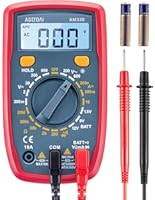
- ✓Measures voltage, current, and resistance
- ✓Large LCD display for clear readings
- ✓Includes test leads and protective case
Check Price
available at
1Best Overall
54,106reviews
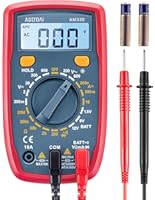
AstroAI Digital Multimeter 2000 Counts
- ✓Measures voltage, current, and resistance
- ✓Large LCD display for clear readings
- ✓Includes test leads and protective case
9.0
Check Price
available at
2
9.4
7,492 reviews
Klein Tools NCVT1P Non-Contact Voltage Tester
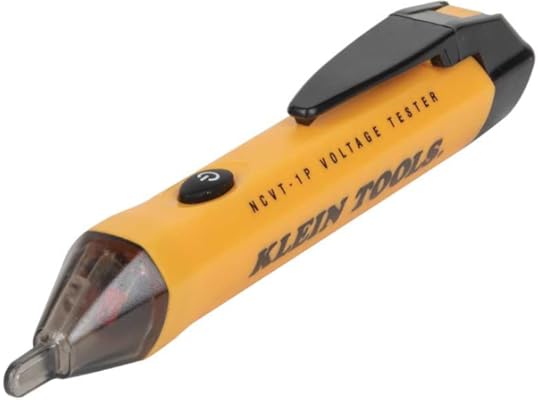
- ✓Detects AC voltage without contact
- ✓Dual-range testing for standard and low voltage
- ✓Compact design fits in shirt pocket
Check Price
available at
2
7,492reviews
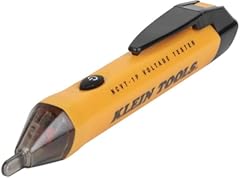
Klein Tools NCVT1P Non-Contact Voltage Tester
- ✓Detects AC voltage without contact
- ✓Dual-range testing for standard and low voltage
- ✓Compact design fits in shirt pocket
9.4
Check Price
available at
3
9.2
19,917 reviews
AstroAI TRMS 6000 Digital Multimeter
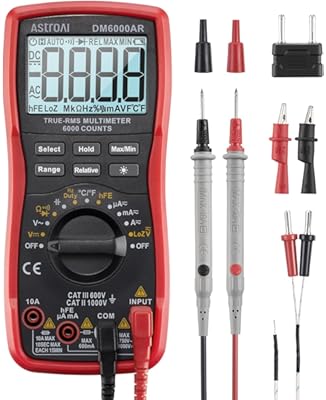
- ✓Versatile Digital Multimeter - Accurately
- ✓Thoughtful Design - Support Data Hold, Large
- ✓Professional level is reflected in some
Check Price
available at
3
19,917reviews
AstroAI TRMS 6000 Digital Multimeter
- ✓Versatile Digital Multimeter - Accurately
- ✓Thoughtful Design - Support Data Hold, Large
- ✓Professional level is reflected in some
9.2
Check Price
available at
4
9.2
13,116 reviews
TESMEN TM-510 Digital Multimeter 4000
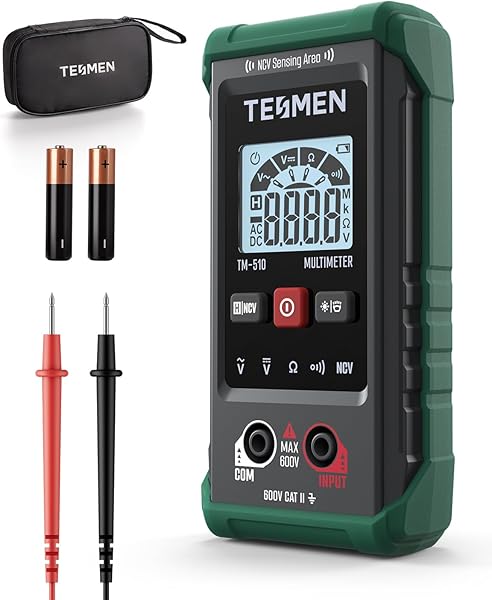
- ✓4000-count display for precise AC/DC voltage
- ✓Smart Auto Mode switches measurement modes instantly
- ✓Measures voltage, resistance, and continuity safely
Check Price
available at
4

13,116reviews
TESMEN TM-510 Digital Multimeter 4000
- ✓4000-count display for precise AC/DC voltage
- ✓Smart Auto Mode switches measurement modes instantly
- ✓Measures voltage, resistance, and continuity safely
9.2
Check Price
available at
5
9.2
8,571 reviews
AstroAI CM2000 Digital Clamp Meter
- ✓Measures AC current up to 2000A
- ✓Auto-ranging with true RMS readings
- ✓LCD display shows voltage and resistance
Check Price
available at
5
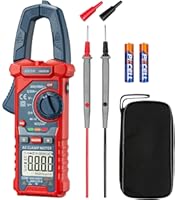
8,571reviews
AstroAI CM2000 Digital Clamp Meter
- ✓Measures AC current up to 2000A
- ✓Auto-ranging with true RMS readings
- ✓LCD display shows voltage and resistance
9.2
Check Price
available at
6
9.0
25,100 reviews
KAIWEETS Digital Multimeter with Case
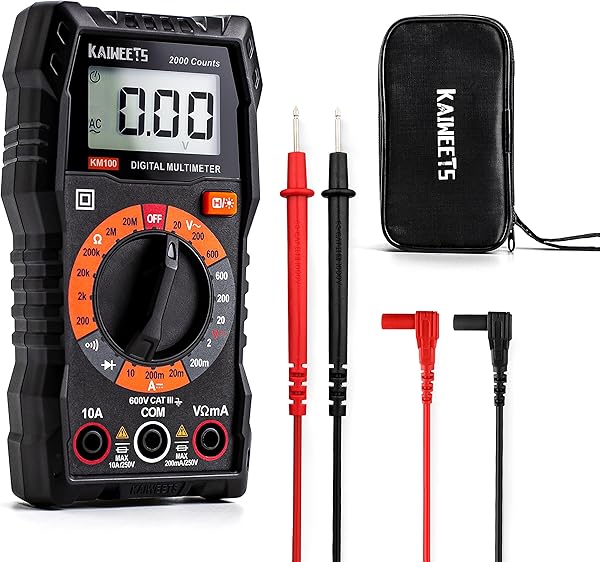
- ✓Measures DC/AC voltage, current, and resistance
- ✓Includes protective carrying case and test leads
- ✓Lifetime warranty with technical support included
Check Price
available at
6
25,100reviews
KAIWEETS Digital Multimeter with Case
- ✓Measures DC/AC voltage, current, and resistance
- ✓Includes protective carrying case and test leads
- ✓Lifetime warranty with technical support included
9.0
Check Price
available at
7
8.8
836 reviews
Digital Multimeter with Battery Tester
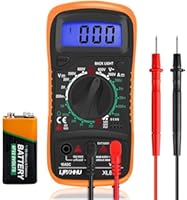
- ✓Measures AC/DC voltage, current, resistance, continuity
- ✓Overload protection on all ranges for safety
- ✓Double insulation with angled stand for stability
Check Price
available at
7
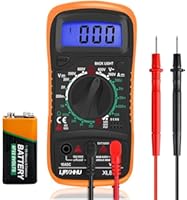
836reviews
Digital Multimeter with Battery Tester
- ✓Measures AC/DC voltage, current, resistance, continuity
- ✓Overload protection on all ranges for safety
- ✓Double insulation with angled stand for stability
8.8
Check Price
available at
8
8.0
9 reviews
HAOFILM LR41 AG3 Alkaline Battery 10-Pack

- ✓1.5V with 40mAh capacity for small devices
- ✓10-pack of reliable alkaline batteries
- ✓Model engraved for easy identification
Check Price
available at
8

9reviews
HAOFILM LR41 AG3 Alkaline Battery 10-Pack
- ✓1.5V with 40mAh capacity for small devices
- ✓10-pack of reliable alkaline batteries
- ✓Model engraved for easy identification
8.0
Check Price
available at
9
8.0
9 reviews
Klein Tools IR1 Infrared Thermometer
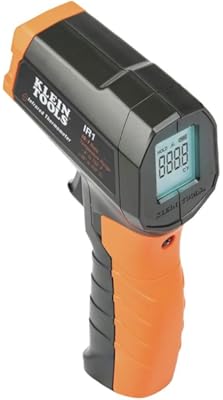
- ✓10:1 optical resolution for accurate distance readings
- ✓Measures -4°F to 752°F temperature range
- ✓Digital display with quick response time
Check Price
available at
9
9reviews
Klein Tools IR1 Infrared Thermometer
- ✓10:1 optical resolution for accurate distance readings
- ✓Measures -4°F to 752°F temperature range
- ✓Digital display with quick response time
8.0
Check Price
available at
10
Best Value
8.0
9 reviews
Klein Tools MM325 Digital Multimeter
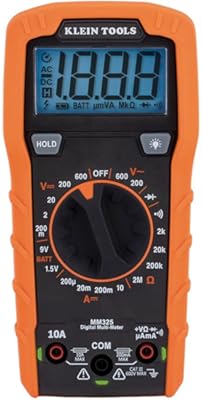
- ✓Measures AC/DC voltage to 600V, 10A current
- ✓Tests continuity, diodes, and battery function
- ✓LED lead-alert protection for safety
Check Price
available at
10Best Value
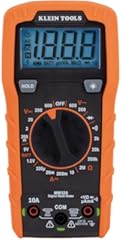
9reviews
Klein Tools MM325 Digital Multimeter
- ✓Measures AC/DC voltage to 600V, 10A current
- ✓Tests continuity, diodes, and battery function
- ✓LED lead-alert protection for safety
8.0
Check Price
available at
Buyer's Guide
Measurement Range and Accuracy
Choose a multimeter rated for your typical tasks. Basic 2000-count models (resolution to 1.999V) suit home DIY and simple electronics. For HVAC or automotive work, opt for 4000-6000 count meters with ±0.5% DC accuracy. True RMS (TRMS) capability matters when measuring AC current from variable frequency drives or inverters—non-TRMS meters can show 5-10% error on non-sinusoidal waveforms. Most residential electrical work needs 600V AC/DC maximum; industrial users should verify CAT III or CAT IV safety ratings.
Safety Certifications
Verify UL, CE, or IEC 61010 certification matching your working environment. CAT II (300V) covers standard outlets; CAT III (600V) is required for panel work and commercial installations. Fused inputs prevent damage from overload—check that replacement fuses are readily available. Models with separated input jacks reduce risk of incorrect probe placement.
Additional Functions
Clamp meters (20-400A range) enable current measurement without breaking circuits, essential for troubleshooting breakers or motors. Non-contact voltage testers (NCV) provide quick safety checks but aren't precision instruments. Continuity buzzers, diode testing, and capacitance measurement (up to 100µF minimum) expand functionality for electronics repair. Backlit displays improve visibility in dim panels or under dashboards.
Build Quality and Warranty
Rubber holsters and 1-2 meter drop ratings protect against job site damage. Test lead quality varies significantly—silicone insulation stays flexible in cold, and CAT-rated shrouded connectors prevent accidental shorts. One-year warranties are standard; premium brands offer 2-3 years with responsive support for calibration issues.
FAQ
What's the difference between a regular multimeter and a True RMS meter?+
True RMS multimeters accurately measure AC voltage and current from modern electronics like dimmer switches and variable speed motors, while standard meters only work correctly with pure sine waves from wall outlets. If you troubleshoot appliances, power tools, or automotive systems, TRMS is worth the $10-20 premium.
Can I use a basic multimeter to test my home's electrical panel?+
Only if it's CAT III rated for 600V and has fused inputs—using a CAT II meter at the breaker box risks arc flash injury. Check the meter's front label for CAT rating; if absent, stick to testing outlets and appliances only.
Do I need a clamp meter or is a standard multimeter enough?+
Standard multimeters require breaking the circuit to measure current, which is impractical for testing breakers or appliance draw. A clamp meter measures current by clamping around a single wire—essential for diagnosing electrical loads but unnecessary for basic voltage checks or electronics hobby work.
How often should I replace the test leads on my multimeter?+
Inspect leads before each use for cracked insulation, exposed wire, or damaged probe tips, replacing immediately if found. Quality leads last 3-5 years with regular use, but budget leads may need annual replacement—always buy CAT-rated replacements matching your meter's safety rating.
How We Rank
Updated April 2026 · refreshed monthly
Each ranking combines verified-purchase reviews from Amazon, expert research from independent publications, and our editors' own judgment on what each product is genuinely best for.
Read our full method →